
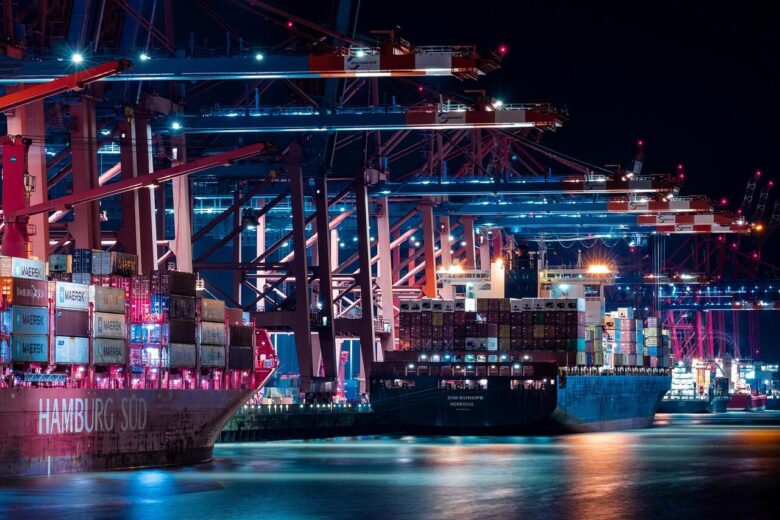
Insuring expensive commercial cargo requires more than purchasing a certificate for the invoice amount. The policy must match the cargo, ownership and risk-transfer terms, complete transport journey, packaging method, storage periods, theft exposure, temperature or handling requirements, maximum value in one location, and the evidence that would be needed after a loss.
High-value cargo can include electronics, medical equipment, production machinery, aerospace parts, laboratory instruments, artwork, luxury goods, pharmaceuticals, specialized chemicals, prototypes, and critical replacement components.
These shipments may combine high financial value with difficult handling, theft exposure, fragile internal components, narrow temperature limits, long replacement times, confidential technology, or a major effect on production if delivery fails.
The correct insurance structure depends on the specific shipment and policy wording. A policy described commercially as “all risks” does not cover every possible loss. Coverage remains subject to exclusions, deductibles, limits, warranties, declarations, geographic restrictions, packaging requirements, and claims conditions.
Cargo insurance and carrier liability are not the same protection. Cargo insurance responds under the insurance contract, while carrier liability depends on whether the carrier is legally responsible and may be restricted by conventions, national laws, transport documents, contractual limits, defenses, and filing deadlines.
Why carrier liability may be far below the cargo value
A carrier can be liable for cargo loss or damage without being required to reimburse the full commercial value. International transport regimes often calculate maximum liability using weight, package count, or another statutory unit.
The applicable rule depends on the mode, countries, route, transport document, contract, and legal jurisdiction. The following examples are provided only to show why a separate cargo policy may be necessary.
| Transport situation | Illustrative legal limit | Important qualification |
|---|---|---|
| International air carriage under the Montreal Convention 1999 | 26 Special Drawing Rights per kilogram for cargo loss, damage, destruction, or delay, effective from December 28, 2024. | The convention, jurisdiction, declarations of interest, defenses, and shipment facts must be reviewed. The SDR conversion into national currency changes over time. |
| International road carriage covered by the CMR Convention | Generally 8.33 Special Drawing Rights per kilogram of gross weight short. | CMR applies only when its legal conditions are met. Contractual facts and any declared value or special interest may affect the analysis. |
| Ocean carriage under Hague-Visby-type rules | Commonly expressed as 666.67 SDR per package or unit, or 2 SDR per kilogram, whichever produces the higher amount. | Not every country or bill of lading uses the Hague-Visby regime. Package definition and the applicable law can materially change the result. |
| Ocean carriage governed by United States COGSA | US$500 per package or, for goods not shipped in packages, per customary freight unit, unless a higher value is properly declared and inserted in the bill of lading. | Package disputes can be complex, especially for containers, pallets, machinery, and separately listed units. |
Declaring a higher value to a carrier is not automatically the same as purchasing cargo insurance. It may increase the carrier’s contractual exposure for an additional charge, but recovery can still depend on proving liability and complying with the carriage terms.
Identify who should arrange the insurance
The sales contract should identify when risk transfers between seller and buyer and whether either party must arrange insurance. Incoterms® rules can support this allocation, but they do not replace the sales contract or insurance policy.
Under Incoterms® 2020, CIF and CIP require the seller to arrange insurance, although the required coverage level differs between the two rules. Other Incoterms® rules may leave the buyer or seller to arrange insurance according to the contract and the point at which each party bears the risk.
- Confirm the Incoterms® rule and named place or port
- Identify the exact point where risk transfers
- Determine which party has an insurable financial interest
- Check whether the seller’s policy protects the buyer directly
- Review local rules restricting foreign cargo insurance
- Confirm whether banks or financing parties require specific coverage
- Avoid duplicate insurance without coordinating the policies
- Verify who controls the claim and receives the settlement
An Incoterms® rule does not prove that the insurance is adequate. The insurance certificate, policy wording, limits, exclusions, deductible, valuation, duration, insurer, and claims procedure still need independent review.
Choose the right policy structure
Single-shipment policy
Arranged for one specific movement. It may suit an occasional shipment, unusual cargo, one-time machinery purchase, prototype, or project component. Every journey detail must be accurate because the policy is not automatically renewed for later shipments.
Annual open cargo policy
Covers eligible shipments made during the policy period, subject to reporting requirements, limits, commodities, routes, conveyances, and other agreed terms. It may suit businesses that import or export regularly.
Stock-throughput policy
Can combine transit and agreed storage exposures under one program. It may reduce gaps between marine cargo and property policies, but locations, inventory values, accumulation limits, and storage conditions must be defined carefully.
Project cargo coverage
Designed for large, heavy, complex, or critical equipment movements. Insurers may require route engineering, lifting plans, vessel review, packing standards, specialist surveys, and marine warranty surveyor approval.
High-value valuables, fine art, precious metals, cash-like instruments, and certain luxury goods may require specialized specie or fine-art coverage rather than a standard commercial cargo form.
Understand what the coverage wording actually does
| Coverage structure | General purpose | What must still be checked |
|---|---|---|
| Broad cover Institute Cargo Clauses (A) or similar wording |
Broad protection for risks of physical loss or damage, subject to the wording’s exclusions and conditions. | Packing, delay, inherent vice, insolvency, temperature, mechanical derangement, cyber, sanctions, war, strikes, unattended vehicles, and theft conditions. |
| Listed perils Institute Cargo Clauses (B) or (C), or similar wording |
Covers specified causes of loss rather than every accidental external cause not excluded. | Whether the listed events realistically match the cargo, route, handling, and storage exposures. |
| Additional clauses War, strikes, theft, temperature, machinery, or other endorsements |
Adds, changes, restricts, or clarifies protection for a specific exposure. | Geographic limits, cancellation provisions, warranties, security standards, monitoring requirements, and sublimits. |
The phrase “all risks” is often misunderstood. It generally describes broad accidental physical-loss or damage coverage, not protection for every commercial problem. Standard cargo wording commonly excludes or restricts losses connected with delay, ordinary leakage, wear, insufficient packing, inherent vice, insolvency, nuclear risk, and certain war or strike events.
Pure financial loss caused by a late shipment may also require a separate solution. For project cargo, a delay-in-start-up or advance-loss-of-profits policy may address specified financial consequences of a covered physical-damage event, subject to its own conditions.
Set the insured value before the shipment moves
The valuation basis should be written into the policy or certificate. It should not be improvised after a loss.
Some policies use an agreed formula such as invoice value plus freight and a stated percentage. Others use replacement cost or another declared basis. There is no universal formula that is correct for every shipment.
Underinsurance can create a settlement gap. Depending on the wording, a policy may apply an average, coinsurance, proportional-settlement, or maximum-limit provision. The company should ask the broker or insurer to demonstrate how a partial and total loss would be calculated.
Do not assume the insurer will automatically pay the full declared value after any damage. The settlement may depend on repairability, depreciation, salvage, deductible, valuation wording, extent of damage, policy limits, exclusions, and proof of financial loss.
Match coverage to the cargo’s actual vulnerabilities
Theft, moisture, condensation, shock, electrostatic damage, concealed internal damage, counterfeit substitution, and high value in a small package.
Review theft, moisture and concealed-damage termsTemperature excursion, delay, incorrect storage, contamination, loss of regulatory usability, sensor failure, and chain-of-custody gaps.
Request temperature-deviation wordingImpact, vibration, water entry, corrosion, lifting damage, tipping, misalignment, internal mechanical damage, and inadequate foundation or securing.
Consider surveys and machinery endorsementsTheft, pilferage, substitution, fraudulent collection, fake carriers, unattended vehicles, unsecured parking, and route disclosure.
Check security warranties and sublimitsBreakage, vibration, humidity, temperature, handling marks, poor crating, restoration costs, loss of value, and exhibition-related storage.
Use specialist valuation and handling termsPhysical damage may be modest while replacement time causes major business interruption or project delay.
Separate cargo damage from delay exposureDefine the complete insured journey
A shipment rarely moves directly from one building to another without intermediate handling. Coverage should be checked across every stage, including temporary storage and multimodal transfers.
The policy should define when transit attaches, when it terminates, how long ordinary storage is allowed, and what happens when the cargo is delayed, diverted, repacked, returned, rejected, held by customs, or sent to a repair facility.
For multimodal shipments, one through-transit policy may provide more consistent protection than separate policies for each leg. However, the exact attachment and termination clauses still control.
Packing is both a loss-prevention and coverage issue
Insurers commonly expect the cargo to be packed and prepared appropriately for the expected journey. A broad policy may still exclude loss caused by insufficient or unsuitable packing performed by the insured or its employees, depending on the wording.
Engineering
Review weight distribution, center of gravity, lifting points, blocking, bracing, vibration, moisture control, corrosion protection, shock limits, and container or vehicle suitability.
Execution
Record who packed the cargo, materials used, torque or securing checks, seal numbers, loading sequence, container condition, and final closure.
Evidence
Keep dated photographs, inspection reports, packing drawings, certificates, weight records, sensor activation details, and signed handover documents.
Very heavy, oversized, fragile, or technically complex cargo may require an insurer-approved surveyor or marine warranty surveyor. Approval may be a condition of coverage rather than an optional recommendation.
- Use packaging designed for the transport mode and duration
- Verify the container, trailer, crate, skid, and lifting points
- Protect against rain, condensation, salt, humidity, and corrosion
- Confirm blocking, bracing, lashing, and weight distribution
- Record cargo condition before packing and after loading
- Use tamper-evident seals where appropriate
- Document shock, tilt, temperature, or humidity monitors
- Retain packaging specifications and contractor records
Review security requirements before dispatch
High-value, portable cargo can attract organized theft and fraud. A policy may include security warranties or conditions relating to approved carriers, dual drivers, alarms, secure parking, route plans, vehicle immobilizers, escorts, seals, tracking devices, and unattended-vehicle restrictions.
| Control area | Questions to resolve | Possible insurance consequence |
|---|---|---|
| Carrier selection | Was the carrier independently verified, contracted properly, and checked against fraud or identity risks? | Unapproved or fraudulent carriers may create coverage and recovery difficulties. |
| Vehicle and driver | Are driver identity, registration, equipment, tracking, locks, alarms, and collection instructions confirmed? | Failure to meet required security standards may affect a theft claim. |
| Parking and stops | Are approved secure locations available along the route and during mandatory rest periods? | Unattended-vehicle exclusions or warranties may apply. |
| Information control | Who can see commodity, value, route, driver, tracking, and delivery details? | Unnecessary disclosure can increase targeted-theft and social-engineering exposure. |
| Delivery verification | How will the receiving party, address, appointment, signature, and authority be authenticated? | Fraudulent or misdirected delivery may be treated differently from physical theft. |
Create the claim file before a loss occurs
The exact documents depend on the policy and loss, but the following records are commonly important:
What to do immediately after discovering damage
- Protect people, property, and the cargo Address safety, contamination, leakage, fire, unstable equipment, hazardous materials, and further deterioration before beginning the commercial investigation.
- Notify the insurer or broker promptly Follow the notice instructions in the policy or certificate. Request guidance on surveys, emergency repairs, salvage, testing, and evidence preservation.
- Record the condition before moving anything unnecessarily Photograph the cargo, packaging, seals, container, vehicle, water marks, impact points, labels, serial numbers, temperature display, and surrounding area.
- Note visible damage accurately on delivery records Avoid signing a clean receipt when visible damage or shortage exists. Record what is observed without guessing at the cause.
- Preserve packaging and damaged parts Do not discard crates, braces, wrapping, seals, components, or sensor devices unless safety or loss mitigation requires immediate action.
- Arrange the required survey or inspection Give the insurer, carrier, terminal, and other relevant parties an opportunity to inspect when required by the policy or transport terms.
- Prevent the loss from becoming worse Separate wet cargo, stabilize machinery, move temperature-sensitive goods to controlled storage, secure the site, and document all mitigation expenses.
- Notify responsible carriers and service providers Protect recovery rights by sending written notice within the deadlines applicable to the transport document and legal regime.
- Do not repair, dispose of, or sell the cargo without coordination Emergency action may be necessary, but major repair, salvage, destruction, or disposal decisions should be documented and discussed with the insurer where possible.
- Build one controlled claim timeline Record discovery, notifications, inspections, movements, tests, decisions, estimates, documents received, and the person responsible for each next action.
Prompt notification does not mean making an unsupported accusation. Report the observed condition, shipment references, location, estimated exposure, and urgent actions while the cause remains under investigation.
Hypothetical example: concealed damage to precision equipment
A company imports a specialized machine packed in a custom export crate. The crate appears intact at delivery, but a tilt indicator has activated and the internal shock monitor recorded a significant event.
Useful preparation
- Agreed-value cargo policy
- Professional packing design
- Pre-shipment condition report
- Serial-number photographs
- Shock and tilt monitors
- Installation and testing protocol
Controlled response
- Machine remains unpowered
- Insurer and carrier receive notice
- Crate and monitors are preserved
- Joint inspection is requested
- Manufacturer performs diagnostic testing
- Repair and replacement options are documented
The investigation may find repairable damage, a total loss, or no functional damage. The policy response cannot be assumed in advance. The outcome depends on the wording, insured value, evidence, cause, repairability, deductible, salvage, and loss calculation.
The example demonstrates why concealed-damage procedures should be planned before delivery. Powering up or dismantling the machine immediately could worsen the damage or remove evidence needed to determine the cause.
Insurance questions to resolve before shipping
- Who is named as the insured or loss payee?
- Who has the financial risk at each point in transit?
- What is the exact basis of valuation?
- What is the maximum value in one conveyance or location?
- Does coverage include every transport and storage stage?
- Are transshipment, customs holds, and temporary storage covered?
- Which Institute Cargo Clauses or equivalent wording applies?
- Are war, strikes, theft, terrorism, and piracy addressed?
- Is temperature variation covered when relevant?
- Is mechanical or electrical derangement restricted?
- Which packing or survey warranties must be followed?
- Are high-value theft sublimits or security conditions present?
- Are duties, freight, profit, testing, and replacement costs included?
- How are partial damage, repair, depreciation, and salvage calculated?
- What deductible applies to each type of loss?
- Which claims deadlines and evidence requirements apply?
- How will carrier recovery and subrogation be protected?
- Which countries require locally admitted insurance?
Common mistakes that create insurance gaps
Relying only on carrier liability
The carrier’s legal limit can be far below the shipment value, and recovery may require proving responsibility under strict contractual deadlines.
Buying insurance after departure
Backdated coverage may be unavailable, restricted, or invalid when the loss or circumstances were already known.
Using an incomplete cargo description
Generic descriptions can hide theft, fragility, temperature, dangerous-goods, machinery, or accumulation exposures important to underwriting.
Assuming “all risks” means every risk
Exclusions, warranties, limits, deductibles, and special conditions still control the insurer’s response.
Ignoring storage between transport legs
Customs holds, consolidation, project storage, repair stops, and destination warehousing may exceed ordinary transit coverage.
Failing to disclose maximum accumulation
Several individually insured shipments may gather at one terminal, vessel, aircraft, warehouse, or exhibition and exceed the policy limit.
Accepting unsuitable packing
A packing-related exclusion can become critical when the crate, moisture barrier, securing, or corrosion protection was inadequate.
Discarding evidence too early
Removing packaging, repairing equipment, deleting sensor data, or disposing of damaged cargo can weaken cause and value evidence.
Reporting only to the carrier
The insurer or broker may have separate immediate-notice, survey, mitigation, and documentation requirements.
Missing carrier claim deadlines
Insurance recovery rights may be affected when the insured does not preserve valid claims against responsible carriers or contractors.
Frequently asked questions
Does “all risks” cargo insurance cover every type of damage?
No. It generally provides broad physical-loss or damage protection, but exclusions, warranties, deductibles, limits, geographic restrictions, and policy conditions still apply. Delay, inadequate packing, inherent vice, ordinary wear, and certain war or strike risks may require particular attention.
Should cargo be insured for the commercial invoice value?
The invoice may be part of the valuation, but the policy may also include freight, duties, anticipated profit, or other agreed costs. The correct basis must be stated in the insurance contract.
Does declaring cargo value to the carrier provide full insurance?
Not necessarily. A declared value may increase the carrier’s contractual liability for an extra charge, but it remains different from an independent cargo insurance policy and may still depend on proving carrier liability.
Can a freight forwarder arrange cargo insurance?
A forwarder may arrange or offer access to insurance where legally permitted, but the customer should review the insurer, insured party, certificate, policy wording, limits, exclusions, claims procedure, and the forwarder’s legal role.
Is water damage always covered?
No. Coverage can depend on the cause, policy wording, packaging, container condition, condensation, inherent characteristics of the cargo, maintenance, exclusions, and whether reasonable loss-prevention measures were taken.
What if damage is discovered only after unpacking?
Stop unnecessary handling, preserve the packaging, photograph the condition, notify the insurer or broker promptly, review concealed-damage deadlines, and arrange inspection before major repair or disposal.
Does cargo insurance cover late delivery?
Standard cargo policies generally focus on physical loss or damage and commonly exclude loss caused by delay. Specialized delay-in-start-up or business-interruption protection may be needed for certain projects.
What is general average?
In maritime transport, general average can require cargo interests to contribute to extraordinary sacrifices or expenses incurred to protect the common maritime venture. Cargo insurance may respond to covered contributions and provide required security, depending on the policy.
Final perspective
High-value cargo insurance should be designed around the real movement rather than treated as an administrative document created after the booking.
The strongest program identifies the party at risk, uses an appropriate valuation basis, covers the entire intended journey, addresses cargo-specific vulnerabilities, confirms security and packing requirements, and prepares claim evidence before departure.
Carrier liability, Incoterms® rules, cargo insurance, property insurance, and business-interruption insurance perform different functions. They should be coordinated rather than assumed to provide identical protection.
Before shipping expensive or operationally critical goods, the company should review the final policy and transport contracts with a licensed insurance professional and appropriate legal, logistics, engineering, quality, and security specialists.
Sources and further reading
- International Civil Aviation Organization — Revised Montreal Convention liability limits
- United Nations Economic Commission for Europe — International transport liability overview
- UK Legislation — Carriage of Goods by Sea Act 1971 and Hague-Visby Rules
- United States Code — Carriage of Goods by Sea Act
- International Chamber of Commerce — Incoterms® 2020
- Lloyd’s Market Association — Model insurance wordings and clauses
- International Union of Marine Insurance — Guide to Marine Cargo Insurance
- Chubb — Marine Cargo Claims Guidelines
Editorial note: This guide was prepared by the Samai Supply Tech Editorial Team using publicly available international transport conventions, trade rules, marine insurance resources, and claims guidance. It provides general educational information and does not replace advice from a licensed insurance broker, insurer, lawyer, surveyor, engineer, security specialist, customs professional, or other qualified adviser.

Samai Supply Tech Editorial Team creates practical, research-based content about supply chain management, freight technology, warehouse operations, and e-commerce logistics. Our goal is to explain complex industry topics in a clear and useful way, helping readers better understand modern logistics tools, processes, challenges, and opportunities. Each article is reviewed for clarity, relevance, and accuracy before publication.